
Twenty Years of Showing Up: AFTA, NCAPER and the Work of Building a Resilient Arts Ecosystem
Updated: Jul 14
A note from NCAPER's, Executive Director, Mollie Quinlan-Hayes -
NCAPER was launched 20 years ago and nurtured in its early years by a cohort of Charter Steering Committee members. Today, these leaders continue to guide NCAPER’s work, serve as a trusted brain trust for communities in crisis, and help ensure that we remain attentive to the needs of the artists and arts organizations they represent and serve. As part of our 20th anniversary, we are pleased to share their stories and reflections on why readiness, response, and recovery are so critical to our field.
By Mital Lyons-Warren, Program Manager, Americans for the Arts | NCAPER Steering Committee Member
Twenty years ago, in the wake of Hurricanes Katrina and Rita, a conversation began. At the 2006 Americans for the Arts (AFTA) Arts Advocacy Day, Cornelia Carey, then Executive Director of Craft Emergency Relief Fund, and Bob Lynch, then Executive Director of AFTA, convened a conversation with colleagues about a troubling gap: when disaster struck, individual artists were falling through the cracks. Out of that urgency, the National Coalition for Artists' Preparedness and Emergency Response — NCAPER — was born.
I wasn't in that room. However, I was feeling the direct impact of the disaster as my grandparents moved in with us and started the long process of recovering what remained of their home and healing from the storm. But as a Program Manager at AFTA and a Steering Committee member representing AFTA at NCAPER, I've felt the throughline of that founding energy in every conversation we have today. This year, as NCAPER marks its 20th anniversary, I find myself reflecting on how much more prepared artists and arts organizations are because of this work and how much further we need to go.
From Artists to the Ecosystem
NCAPER didn't stay static. Around 2008, the coalition expanded its lens to include not just individual artists, but arts organizations. The name also evolved — to the National Coalition for Arts Preparedness and Emergency Response — which signaled a broader mission: to strengthen the entire creative ecosystem before, during, and after disaster.
That expansive thinking is very much alive in AFTA's work today. When Erin Harkey became AFTA's CEO in 2025, she brought a clear-eyed vision for what this moment demands. Her vision centers on strengthening the national infrastructure for arts and culture — which includes building a healthy, resilient ecosystem so that when disaster strikes and disrupts that infrastructure, the field is ready to respond and recover. That commitment to resilience isn't a side project at AFTA — it's woven into the organization's understanding of what a healthy arts ecosystem requires.
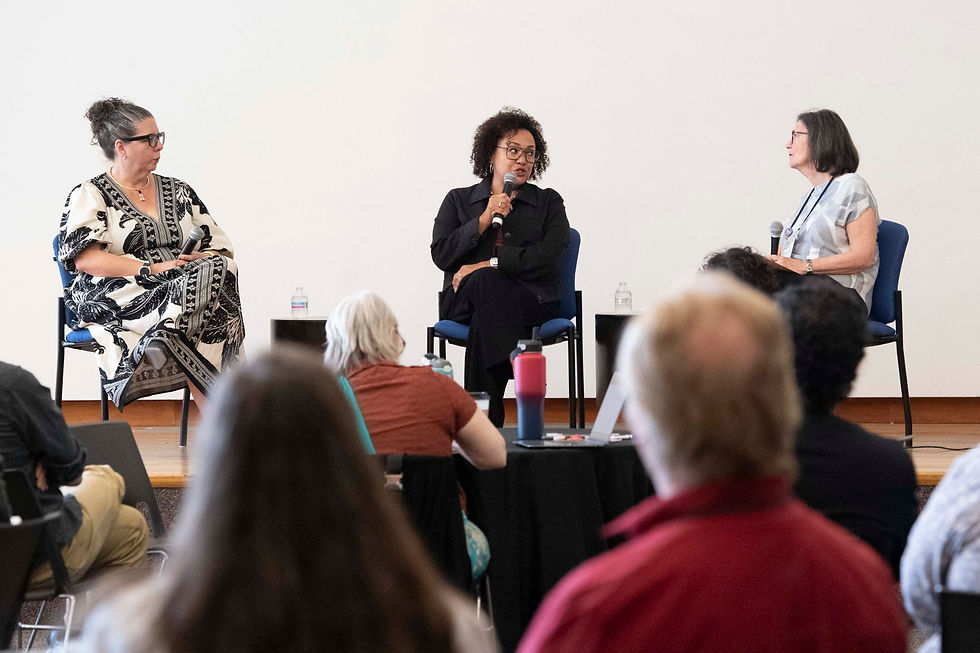
A Pathway Forward: Readiness, Response, and Community Care
This past year, I had the privilege of helping to organize and present the Readiness, Response, and Community Care Pathway, one of nine focused pathways featured at AFTACON, AFTA’s annual convention.
The pathway brought together practitioners, leaders, and thinkers to build real skills: how to define readiness for your own organization, how to align preparedness goals with fundable strategies, and how to activate cross-sector networks before a crisis hits. Dr. Maria Rosario Jackson, former Chair of the National Endowment for the Arts, was among our keynote voices, and her framing resonated with me: the networks, structures, intentions, and plans must be developed ahead of time. The muscle memory must be built. You cannot improvise your way to resilience on a stormy day; you have to build it during the blue-sky ones.

The Two-Sided Coin
The biggest insight I took away from the day is what the planning committee for the pathway started calling the two-sided coin. Usually, a two-sided coin is a metaphor for a dilemma — only one side lands up. But in this case, the two sides aren't in opposition. They're two lenses we must hold simultaneously.
Side one: When a crisis hits, the arts sector is impacted. Artists lose studios, instruments, and archives. Organizations lose venues, staff, and revenue. We need to advocate fiercely for resources to reach those who need them — and we need a strong, interconnected public funding ecosystem — local, state, regional, and national — to make that possible. NCAPER has helped lead that advocacy, including being part of a successful effort to reform FEMA assistance policies so that artists whose tools of their trade are damaged or lost in a federally declared disaster can access support. Local arts agencies are vital civic partners in this system — their community trust isn't optional; it's foundational. Katie Cornell and her team at ArtsAVL (Asheville Area Arts Council) showed exactly this after Hurricane Helene, coordinating across local, state, and federal organizations to address infrastructure damage, support long-term recovery, and position arts and culture as central to the region's future resilience.
Side two: The arts sector is also a resource in crisis — not a supplicant, but an equal partner. We have spaces that can serve as community response hubs, people who understand logistics, manage large crowds safely, and build trust across communities. After devastating floods struck the Texas Hill Country in 2025, Katharine Boyette at the Kerrville Convention & Visitors Bureau demonstrated this firsthand — supported by NCAPER Response Faciltation Calls, her leadership helped ensure the arts were central to the region's recovery, enhancing its authenticity and complementing tourism rebuilding efforts. NCAPER has known this capacity arts and culture can have and has led the field in network creations that support the infrastructure needed.
Both sides of the coin must be in play. We need to continue to advocate for the arts AND show up as active agents in resilience and recovery — not one or the other.
Where We Go From Here
Twenty years after that founding conversation, the work is more urgent than ever. Disasters — natural, human-caused, political, organizational — don't pause for us to get ready. The question isn't whether disruption will come. It's whether we'll be prepared when it does.
Here's what I'd ask every arts advocate reading this to do right now:
Talk about it. Have the conversation with your team, your board, your peers. Make the case for why preparedness is a strategic, fundable expression of mission — not an afterthought. The AFTACON pathway emerged through continuous conversation between staff and leadership that showed frontline insights aligned with leadership's vision for a resilient arts ecosystem. Connect with your national community, join AFTA’s Post-AFTACON Email Network for readiness and response to be part of the ongoing conversation.
Build the relationships. Find your local emergency manager. Invite potential partners — city planners, county leaders, public health officials — into your space, to your events, into relationship with the arts. Seek out the local tables where these conversations happen and make sure arts organizations have multiple seats. Check out how Houston Arts Alliance is leading this work as the only local arts agency, for now, who has a director of disaster services.
Connect vertically. While all disasters are local in their impact, resilience is built through healthy relationships that run from local to county to state to federal. Public funding for the arts at every level needs to incorporate readiness, response, and community care. Organizations like the Kentucky Heritage Emergency Response Network (KHERN) models how locally driven need can fuel state coordination and bridge national resources back to community.
NCAPER was built twenty years ago around a gap that needed closing, and today artists and arts organizations are better prepared because of it. Whether it’s through emergency response calls, advocacy and policy, or field education, if you're looking for a community already doing this work, NCAPER is here. Twenty years in, we're still convening, still learning, still strengthening the ecosystem — one relationship, one plan, one blue-sky day at a time.


Comments